

Which Is Right for Your Bangkok Stay?
Overview
Bangkok has long cemented its place among the world’s great luxury travel destinations. From the grandeur of its riverside temples to the electric energy of its contemporary dining scene, the city offers a backdrop unlike almost anywhere else. For discerning travellers, though, a quieter but equally significant choice awaits before the trip even begins: staying with a globally recognised luxury brand, or entrusting your stay to one of Thailand’s own celebrated properties. Both categories promise excellence, but they deliver it in very different ways.
A Quick Comparison
| Feature | International luxury chains | Thai luxury hotels |
|---|---|---|
| Brand identity | Global consistency; familiar experience across cities and continents | Distinct local character rooted in Thai heritage and aesthetics |
| Service style | Standardised luxury protocols; polished and highly trained | Warm, intuitive Thai hospitality; personal and culturally expressive |
| Design & ambience | Contemporary or globally curated interiors; brand-aligned decor | Thai architecture, art, and craftsmanship are woven into every detail |
| Dining | International menus, celebrity chef concepts, and global wine programmes | Authentic regional Thai cuisine, heritage recipes, local produce |
| Loyalty perks | Global points programmes with redemptions worldwide | Limited global rewards, but often more personalised guest benefits |
| Price positioning | Premium to ultra-luxury; rates tied to global brand equity | Competitive luxury; exceptional value relative to quality delivered |
| Best for | Business travellers, frequent flyers, brand loyalists | Cultural immersion, honeymoons, and guests seeking a genuinely Thai experience |
Brand Identity & the Guest Experience
International chains bring with them a certain reassurance. Regular guests know what to expect: a globally refined level of service, familiar loyalty programmes, and interiors that speak to a consistent brand language. For the frequent business traveller or someone hopping between cities on a longer itinerary, this consistency is a genuine comfort.
Thai luxury hotels, by contrast, are defined by their singularity. Their identity is inseparable from the country’s cultural heritage — expect interiors shaped by traditional craftsmanship, staff whose warmth feels culturally ingrained rather than procedurally trained, and a guest experience that changes meaningfully depending on where in Thailand you happen to be.
Service: Standardised Excellence vs Thai Warmth
Service is arguably the sharpest point of distinction between the two categories. International brands invest heavily in standardised training; their staff delivers meticulous, anticipatory care informed by global best practices. The result is consistently impressive, though it can sometimes feel more procedural than personal.
Thai luxury hotels operate from a different philosophical foundation. The concept of kreng jai — a deep cultural consideration for others — manifests in service that is attentive without being overbearing. For those asking where they can find a luxury hotel in Bangkok with spacious suites and butler service, both categories deliver, though Thai properties like 137 Pillars Suites & Residences Bangkok distinguish themselves with butlers who approach the role with an intimacy and cultural attentiveness that international chains often struggle to replicate at scale.
Design & Sense of Place
Walk into any flagship property of a major international chain, and you will encounter undeniably beautiful interiors — but the aesthetic conversation is predominantly a global one. The architecture and furnishings could, in many cases, belong to a hotel in Dubai or Singapore just as comfortably as in Bangkok.
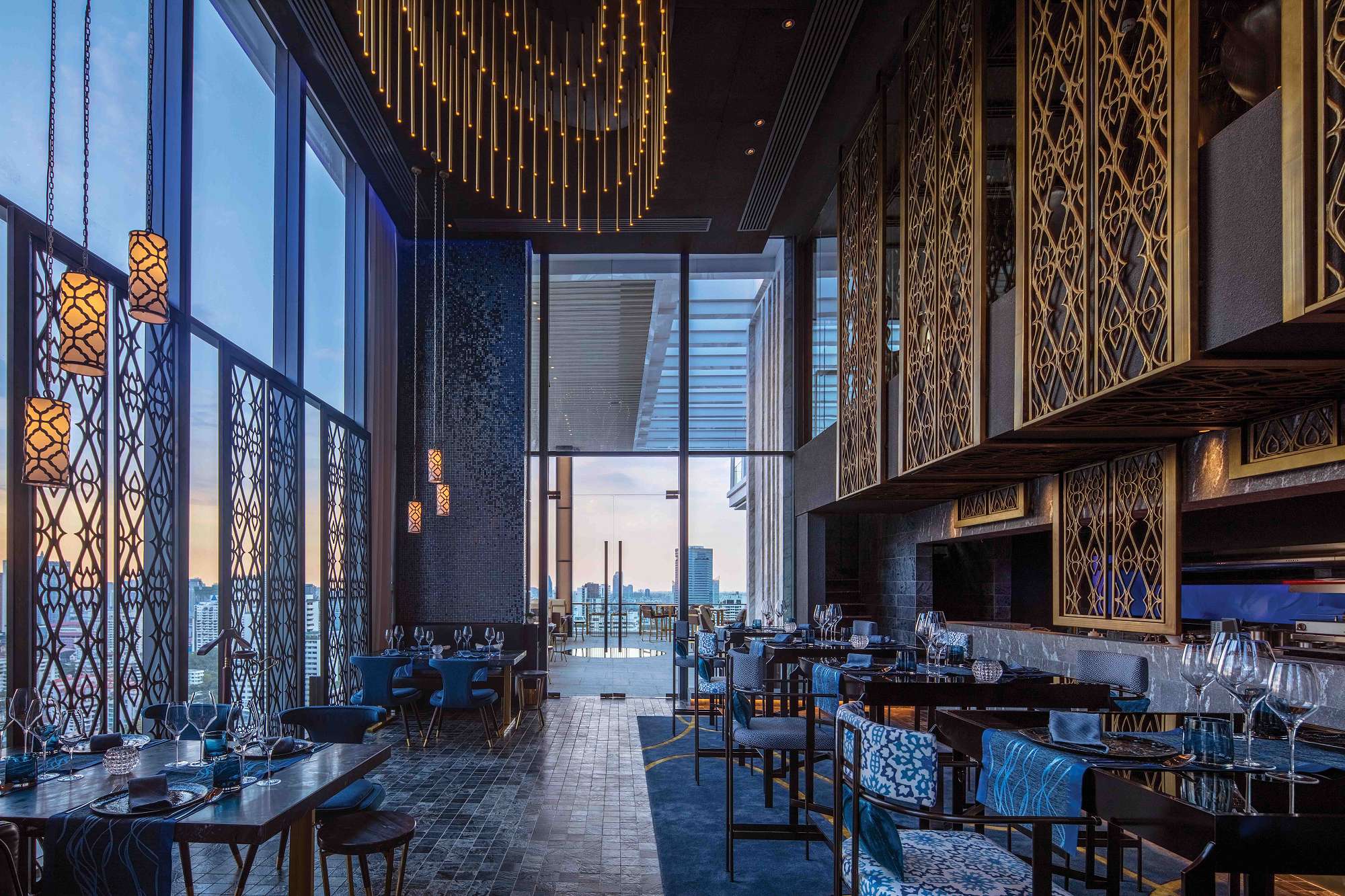
Thai luxury properties are rooted deeply in their geography. Teak detailing, handwoven silk textiles, traditional motifs reinterpreted through a contemporary lens, courtyard gardens inspired by classical Thai landscaping — all of these contribute to a sense of place that no global brand can straightforwardly manufacture.
Dining
International chains tend to lead with breadth, offering everything from Japanese omakase bars and Italian trattorias to international wine cellars and high-profile chef collaborations that draw Bangkok’s own food community into the hotel’s orbit. These are serious culinary programmes that stand independently of the hotel experience.
Thai luxury hotels typically anchor their dining in local identity — drawing on regional recipes handed down across generations, produce sourced from nearby farms or markets, and menus that shift with the season. The result is a dining experience where the food tells the same story as the décor. For guests whose curiosity about Thailand extends to its cuisine, this approach offers something far more cohesive and immersive than a well-executed international menu ever could.
Value & Loyalty
International chains come with the infrastructure of global reward programmes. For frequent travellers who accumulate points across dozens of stays annually, the ability to redeem those points in Bangkok is a meaningful advantage that shapes their booking decisions almost by default.
Thai luxury hotels are rarely embedded in major loyalty ecosystems. What they offer instead tends to be more direct: better value per baht spent relative to a comparable international property, and a relationship with the guest that doesn’t need a points system to feel rewarding.
Who Each Option Suits
International chains are the natural choice for corporate travellers on tight schedules, loyalty programme maximisers, and guests whose priority is the peace of mind that comes with a globally trusted brand. They also suit travellers moving between Bangkok and other cities on the same trip.
Thai luxury hotels are the better fit for guests whose journey is specifically about Thailand — couples on honeymoon or a milestone trip, culturally curious travellers, and anyone who believes that where they sleep should tell them something about where they are.
Conclusion
Neither category is superior in absolute terms. International luxury chains offer the consistency, global connectivity, and brand prestige that a certain type of traveller genuinely values. Thai luxury hotels offer something harder to systematise: an experience that is specific, soulful, and unmistakably of this place. The better question is not which is objectively finer, but which experience you are actually travelling to Bangkok to have.