

Vientiane rarely gets the attention that Luang Prabang does, and that's exactly what makes it worth spending real time in. Laos's capital mixes golden Buddhist stupas with French colonial streets along the Mekong, rewarding visitors who slow down rather than treat it as a stopover.
Pha That Luang, the Golden Heart of the City
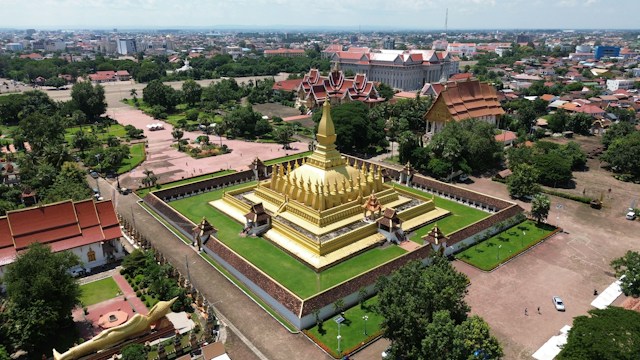
No visit to Vientiane really starts anywhere but Pha That Luang, the gold-covered stupa that serves as the national symbol of Laos and appears on the country's own currency. The current structure is largely the product of an early twentieth century French restoration, and it remains sacred thanks to a legend that a fragment of the Buddha's breastbone rests inside. Late afternoon is the best time to visit, when the light catches the gold leaf just right. It's also a convenient distance from the best hotels in Laos, of the likes of Avani-+ Lanexiang Vientiane Hotel.
Patuxai and the City's French Colonial Layer
A short ride from the stupa sits Patuxai, Vientiane's answer to the Arc de Triomphe, built as a memorial to those who died fighting for Laos's independence. Despite the resemblance, the design is unmistakably Laotian, decorated with Buddhist and Hindu imagery, and climbing to the upper platform rewards visitors with a sweeping view across the city and out toward the Mekong. That same colonial layer shows up elsewhere too, in the city's steady supply of French bakeries turning out fresh baguettes and croissants alongside Lao food stalls.
The Mekong Riverfront After Dark
As the sun sets, the real center of gravity in Vientiane shifts toward the Mekong riverfront. Locals gather along the promenade to walk, exercise, or watch the sky turn orange over the water, and once evening sets in, the riverside night market takes over with stalls selling clothes, handicrafts, and souvenirs. It's a genuinely local scene, and pairing a sunset walk with a cold Beerlao at a riverside bar captures the city's slower rhythm well.
Buddha Park and the City's Quieter, Quirkier Side
For something entirely different, Buddha Park, also known as Xieng Khuan, sits about 25 kilometers outside the city along the river and offers a strange, sculpture-filled detour from the city's temples. Built in 1958 by a single Lao artist, the park is scattered with over 200 concrete Buddhist and Hindu statues, from a massive reclining Buddha to a pumpkin-shaped structure visitors can climb inside. It's stranger and less polished than the city's famous landmarks, which is exactly what makes it worth the trip.